
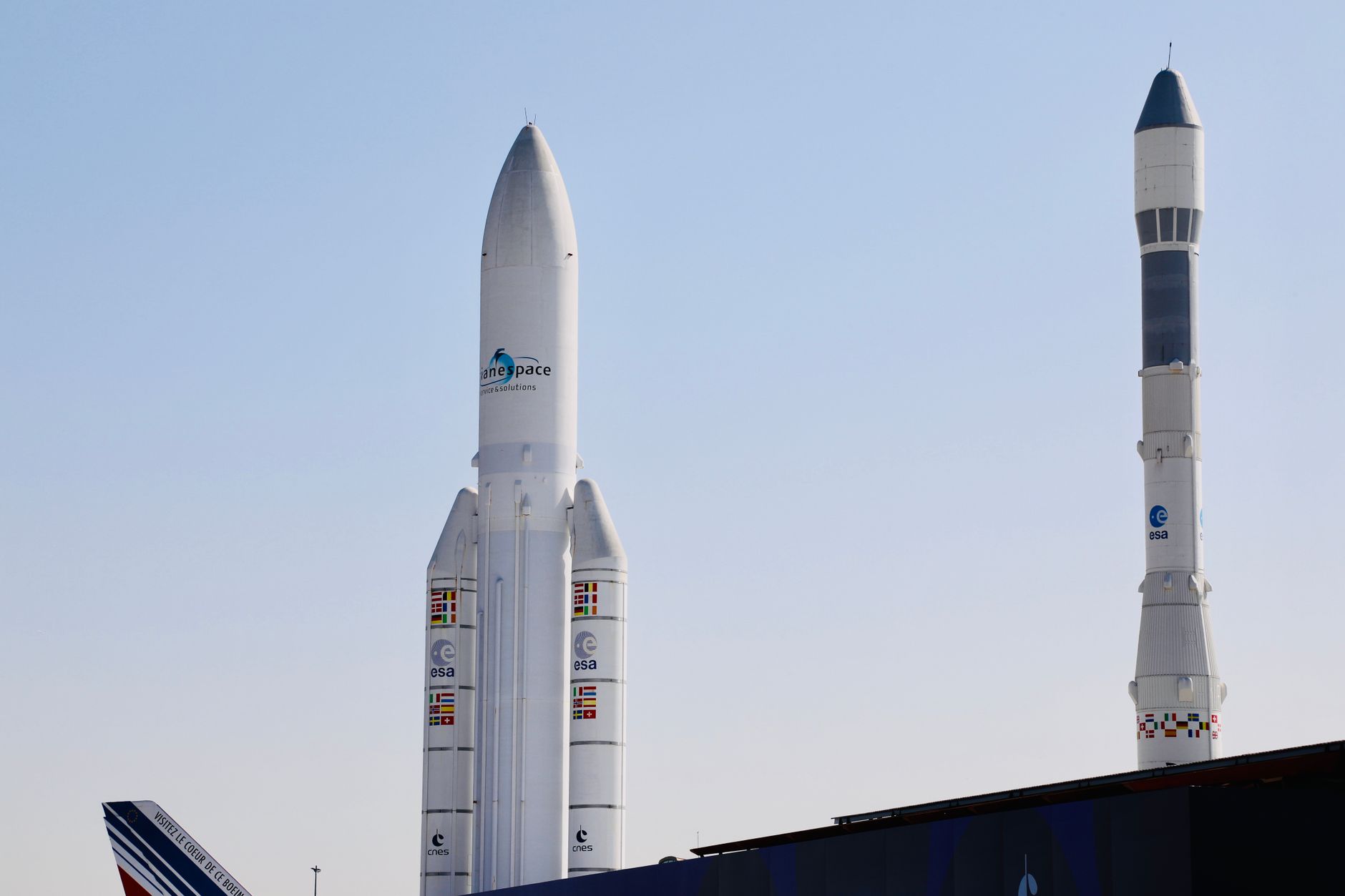
Twin hybrid rockets have been successfully launched to test restart technology at Tiruvidanthai. This significant development highlights advancements in hybrid propulsion systems.
Overview of Twin Hybrid Rockets
Twin hybrid rockets represent a significant advancement in propulsion technology, combining the benefits of both solid and liquid fuels. This innovative approach allows for greater efficiency and control during flight, making them an attractive option for various space missions.
The core concept behind twin hybrid rockets involves the use of a solid fuel grain with a gaseous oxidizer, enabling a more flexible thrust profile. This technology enhances the capability to perform in-space maneuvers and restart operations, which are crucial for missions requiring precise orbital adjustments.
Recent tests conducted at Tiruvidanthai showcased the potential of twin hybrid rockets, particularly in demonstrating their restart capabilities. The successful launch not only validated the technology but also opened new avenues for future space exploration efforts.
Key advantages of twin hybrid rockets include:
- Enhanced safety: Reduced risk of explosion compared to traditional solid rockets.
- Increased performance: Better efficiency in fuel usage and thrust management.
- Versatility: Suitable for a wide range of applications in space testing.
Importance of Restart Technology
The development of twin hybrid rockets has underscored the critical importance of restart technology in modern space exploration. This capability allows rockets to reignite and operate multiple times during a single mission, significantly enhancing mission flexibility and efficiency.
Restart technology is pivotal for various applications, including:
- In-orbit maneuvers: Enabling spacecraft to adjust their trajectories as needed.
- Multiple payload deployments: Allowing a single launch vehicle to deliver several satellites into different orbits.
- Long-duration missions: Supporting missions that require extended operations beyond initial launch parameters.
By integrating this technology into twin hybrid rockets, engineers can ensure reliable performance under various conditions, thereby maximizing the potential for successful space missions. Testing conducted at Tiruvidanthai aims to validate these advancements, further proving the efficacy of twin hybrid rockets as a robust solution for future space endeavors.
Recent Launch Details
Recent advancements in space technology were highlighted during the launch of twin hybrid rockets at Tiruvidanthai. These rockets are designed specifically to test the viability of restart technology, which is crucial for future space missions. The launch took place on a clear day, showcasing the innovative capabilities of hybrid propulsion systems.
The twin hybrid rockets successfully ignited and operated in tandem, demonstrating the potential for multiple restarts during a single flight. Key details from the launch include:
- Launch Date: October 15, 2023
- Mission Duration: Approximately 20 minutes
- Altitude Achieved: 15 kilometers
- Payload: Scientific instruments for atmospheric research
This successful mission marks a significant step forward for twin hybrid rockets, paving the way for future exploratory missions that require adaptable propulsion technology. The data collected during the flight will contribute to ongoing research in hybrid rocket systems.
Future of Space Exploration
The future of space exploration is increasingly pivoting towards innovative propulsion systems, with twin hybrid rockets emerging as a significant contender. As space agencies and private companies look for sustainable and efficient launch methods, the advantages of hybrid technology are becoming more evident.
Hybrid rockets combine the simplicity of solid fuels with the controllability of liquid fuels, allowing for precise thrust adjustments. This is particularly crucial for missions that require multiple engine restarts, a feature that traditional solid rockets lack. The successful tests conducted at Tiruvidanthai have demonstrated the potential of this technology, paving the way for more complex missions.
Moreover, as the demand for satellite deployment and deep space exploration grows, the versatility of twin hybrid rockets positions them as a reliable option. Their ability to operate under various conditions makes them ideal for future missions, ensuring that space exploration can continue to advance safely and efficiently.
In summary, the evolution of twin hybrid rockets is set to play a pivotal role in shaping the future of space exploration.
Photo by Léa Claisse on Pexels
Sources
Related reading
iQOO 16 Launch India: The Best Proven Features Revealed · HMD Pulse 2T Pro: Best Proven Features Revealed · Avatar Seven Havens: Best Proven Gaming Experience Ahead